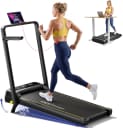
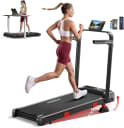
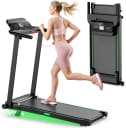
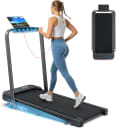
MERACH
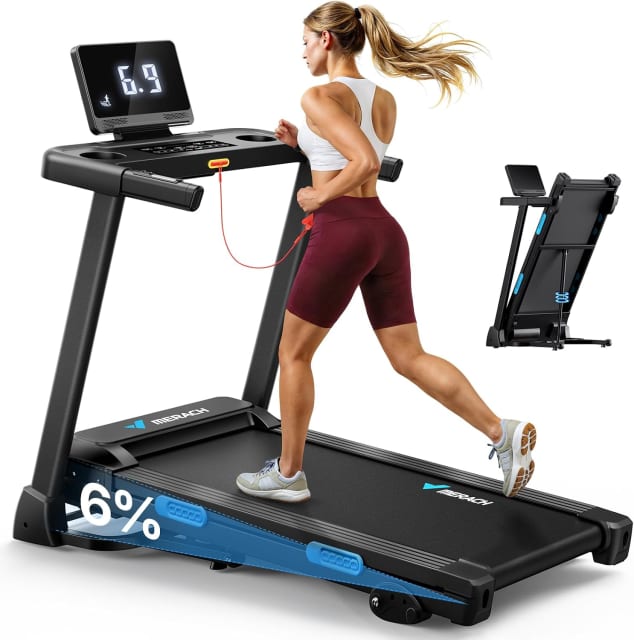
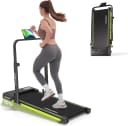
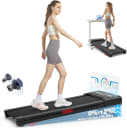
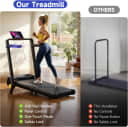
MERACH T12 Foldable Treadmill for Home, 300 LBS Capacity, Wide Running Belt
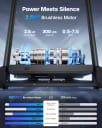
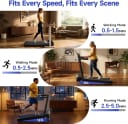
- Speed range listed as 0.5–7.5 mph
- Includes 12 preset workout programs
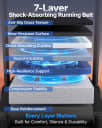
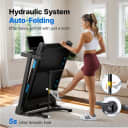
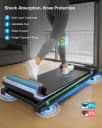
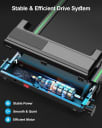
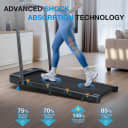
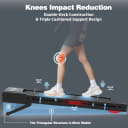
- Shock-absorbing deck components
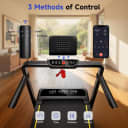
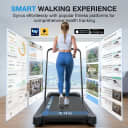
- Bluetooth connection to the MERACH app
available at

A treadmill that folds away can make regular movement easier without giving up a room to bulky equipment. Here’s how to compare belt space, speed, storage, and the details that matter in a small home.
A folding treadmill can make it easier to fit walking or jogging into a busy home, but “compact” means more than a small storage footprint. Compare the running surface and speed with the workouts you want, then check whether the folded machine will actually fit where you plan to keep it.
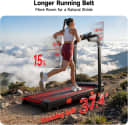
Give your stride enough room. Listings usually give belt length and width in inches. For walking and light jogging, a surface around 40 inches long and 16 inches wide is a useful starting point; taller users or anyone planning to run should look for more length. Compare the belt itself, not the treadmill’s overall dimensions.
Match speed to your real workouts. Check the full speed range and its maximum in miles per hour. A top speed around 7 mph gives more room for brisk walking and jogging than a walking-only machine; runners may need a higher ceiling. Don’t pay for speed you won’t use, but leave some headroom if your routine may change.
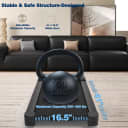
Check the stated limit before you buy. Capacity is the maximum user weight listed by the manufacturer, not a measure of how much storage weight the treadmill can hold. Choose a machine rated for the heaviest person who will use it, and consider extra margin if you expect frequent or vigorous workouts. If a listing doesn’t state a capacity, ask the seller rather than guessing.
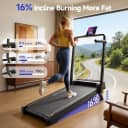
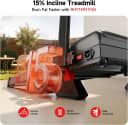
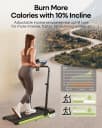
Look for a clearly stated grade and adjustment method. Incline can add variety and increase the effort of a walk, but the maximum percentage alone doesn’t tell you whether you can change it while exercising. Some compact treadmills use manual supports; others offer automatic adjustment. If incline is important to your routine, confirm both the range and how it changes.
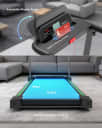
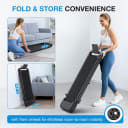
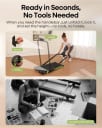
Measure the storage spot, not just the room. Compare folded length, width, and height with the space under your bed, sofa, or against a wall, and leave room to move the machine in and out. Also check the in-use footprint and the clearance around it; a treadmill that stores neatly may still need more floor space during a workout. Listings that give only one folded measurement don’t tell the whole storage story.
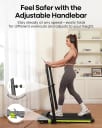
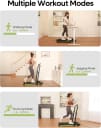
Choose for your most common workout. A broad belt and a higher speed ceiling are useful if you expect to move beyond easy walking, while a walking-focused routine may call for simpler controls and easier storage. Handlebar design also matters: decide whether you want support during a walk, and check whether the bar folds or changes position for storage. Product listings don’t always explain how much effort folding or moving the machine takes.
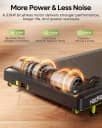
Treat noise numbers as one clue, not a guarantee. A listing may give a decibel figure or describe a motor as quiet, but the sound you hear at home can depend on flooring, pace, and the person using it. If you share walls or work nearby, look for a clear noise specification and consider where the treadmill will sit. A cushioning system may affect how a stride feels, but descriptions alone don’t establish how comfortable it will be for you.
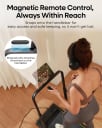
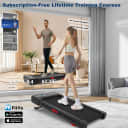
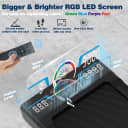
Check controls and extras against your habits. Remote, handlebar, or app controls can make speed adjustments more convenient, while a display can show basic workout information. Apps, preset programs, and entertainment features vary, so confirm whether a feature is included and whether it requires an account or subscription. Don’t let a long feature list outweigh the fit, speed, and storage details you need.
Read the support terms before checkout. Compare warranty coverage for the frame, motor, and parts separately, and check how long each lasts. Find out how to contact support and what the return policy requires, especially if you’ll need to move or assemble the treadmill. If an important measurement or feature is missing from the listing, get it confirmed in writing.
Do a quick fit check at home. Measure the storage area and the planned workout area, then compare both with the product dimensions. Make sure the surface suits your stride, the speed range fits your routine, and the stated capacity covers the intended users. When listings omit details, treat those gaps as questions to resolve—not assumptions in the treadmill’s favor.
Swipe to compare all 8 picks →
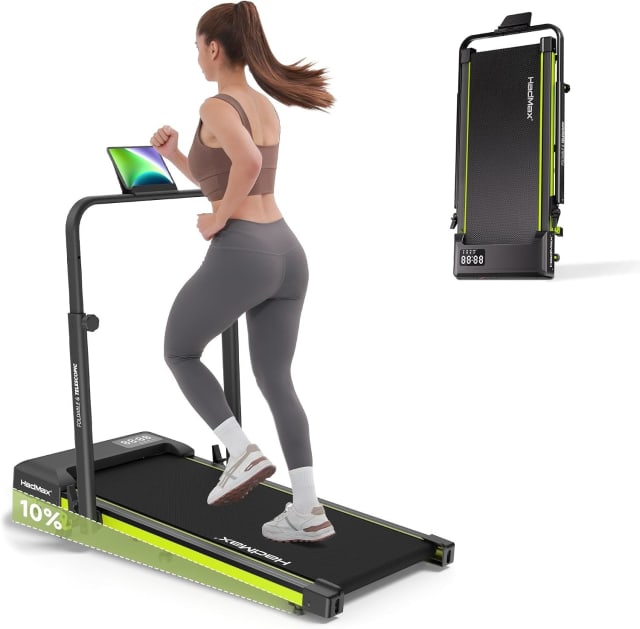
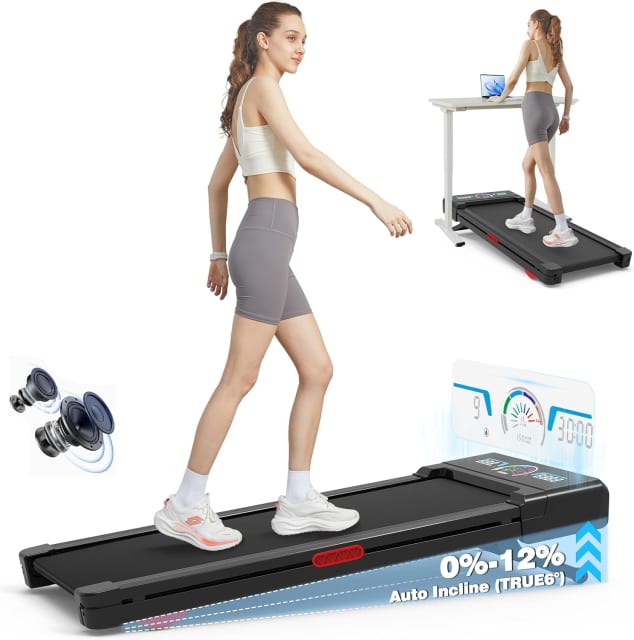
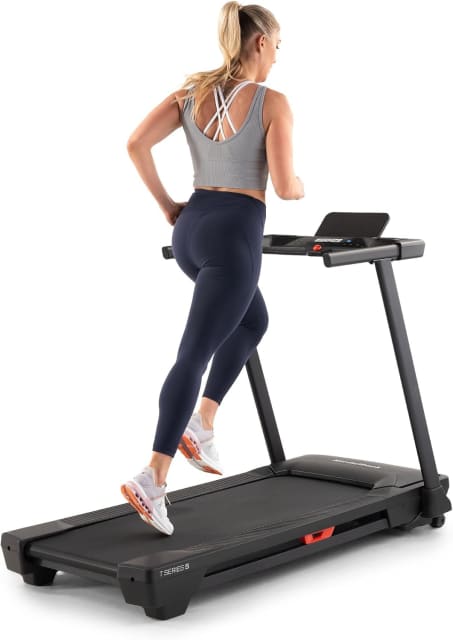
| At a glance | 1 MERACH T12 Foldable Treadmill![]() | 2 YPOO 16% Incline Walking Pad![]() | 3 RHYTHM FUN Incline Walking Pad![]() | 4 Vyrqenoxi Walking Pad Treadmill with Incline![]() | 5 WELLFIT Folding Treadmill![]() | 6 HADMAX Walking Pad Treadmill![]() | 7 TrailViber Walking Pad Treadmill![]() | 8 NordicTrack T5 T Series Treadmill![]() |
|---|---|---|---|---|---|---|---|---|
| Our score | 9.9/10 | 9.6/10 | 9.3/10 | 9.0/10 | 8.7/10 | 8.4/10 | 8.1/10 | 7.8/10 |
| Buyer rating | 4.9 | |||||||
| Running Surface | 42.5 × 16.5 in | 36.6 × 15 in | 37.4 × 15 in | 35 × 14.4 in | 36 × 16 in | 35.43 × 15.75 in | 41 × 16.5 in | 55 × 18 in |
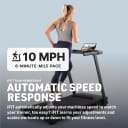
| Top Speed | 7.5 mph | 5 mph | 6.2 mph | 6.2 mph | 6.2 mph | 3.8 mph | 4 mph | 10 mph |
| User Capacity | 300 lbs | 300 lbs | 300 lbs | 220 lbs | 350 lbs | 300 lbs | 450 lbs | 300 lbs |
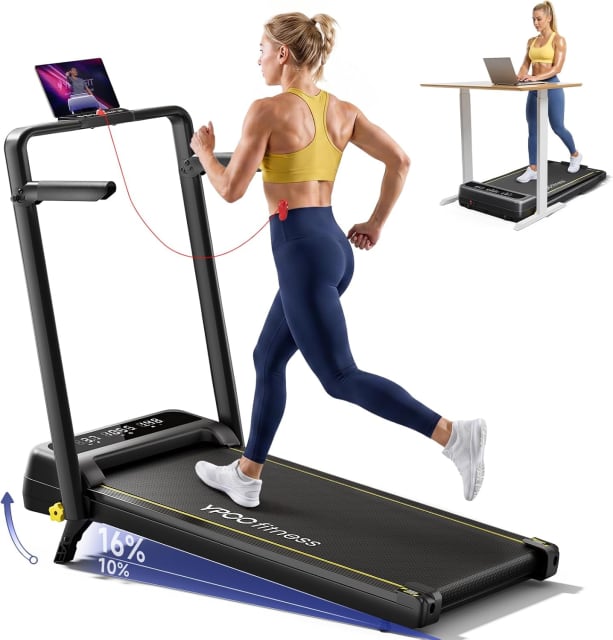
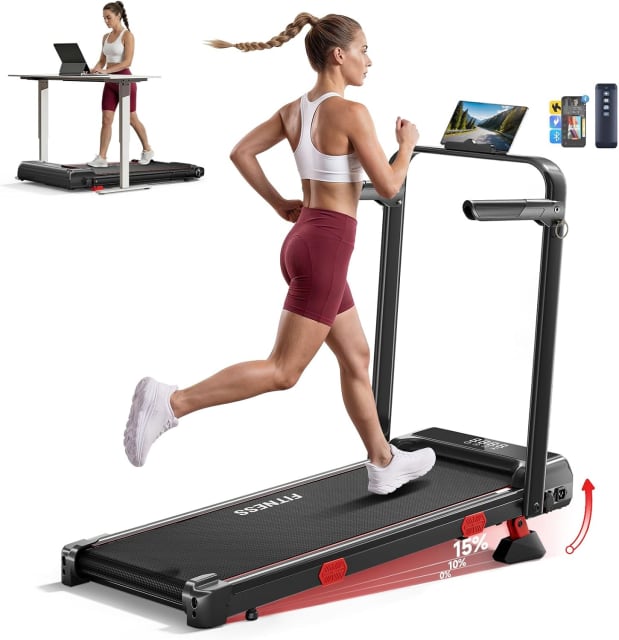
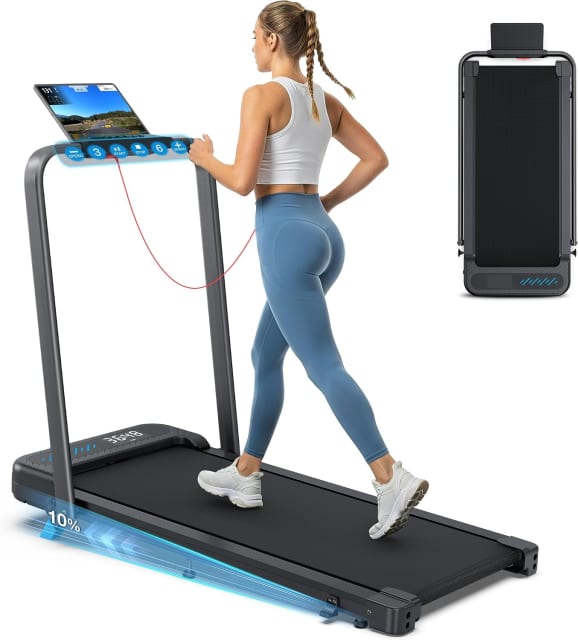
| Incline | 0–6% manual (3 levels: 0%, 3%, 6%) | Up to 16% manual incline | 0–15% manual | 5% manual | 0–10% manual | 10% manual | 0–12%, automatic | 0–10%, automatic |
| Folded Dimensions | 49.2 × 25.6 × 27.6 in | Approx. 42.8 × 22.5 × 5.5 in | 43.5 × 22 × 3.9 in | 40.5 × 18 × 4.7 in | 49.21 × 21.25 × 6.1 in | 47.2 × 22.4 × 5.5 in | 6 × 16.5 × 12 in | 68.3 × 30.5 × 48.7 in |
| Buy |