SABRENT
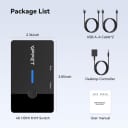
SABRENT Thunderbolt 4 KVM Switch, 40Gbps, 4K@144Hz/8K@60Hz (SB-TB4K)
- Switches between two host computers
- Three Thunderbolt 4 and four USB-A ports
- Up to 60W Power Delivery charging
- Push-button source selection with LED indicators
available at

A KVM switch can make two computers feel like one tidy workstation—but only if it matches your displays, ports, and charging needs. Use this guide to compare the connections that matter before you buy.
The right KVM switch lets two computers share a display setup and peripherals without a tangle of repeated connections. Start with the video ports and display modes your computers actually support, then compare USB speed, charging, and switching controls to fit how you work.
Match the switch to your computers first. A KVM can only pass through the video and USB signals its connections support, so check the ports on both computers and your monitor before comparing headline resolutions. Pay particular attention to laptops: some switches use USB-C or Thunderbolt, while others require separate HDMI, DisplayPort, or VGA connections. An adapter may not carry video reliably, and some listings specifically warn against using one.
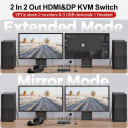
Count displays and check the exact mode. A dual-monitor switch can be a better fit for a multi-screen desk, but both computers need the necessary video outputs and support for multiple displays. Resolution alone is not the whole story: refresh rate can vary with the resolution, number of displays, computer, cables, and connection standard. Check the listing’s notes for the mode you want, including whether a Mac can extend its desktop or only mirror it.
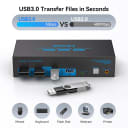
Treat the USB connection as part of the choice. A high-bandwidth Thunderbolt link can carry data for demanding peripherals, while a switch with several USB-A ports may be enough for a keyboard, mouse, printer, or scanner. For external drives and other data-heavy devices, compare the stated transfer rate and confirm which ports provide it; the speed of one connection does not necessarily apply to every port. Some switches also require an extra power connection for devices that draw more power.
Decide whether laptop charging matters. USB Power Delivery lets a compatible switch charge a connected laptop while sharing data and video, reducing the need for a separate charger. Compare the stated wattage with your laptop’s charging needs; a lower-power output may not keep every laptop charged during demanding work. A listing that does not state charging support should not be assumed to provide it.
Display Outputs — enough for your monitors. This is the maximum number of displays the switch says it can support at once. Choose a value that matches your desk, and confirm that each computer can drive that many screens through the connections available. A USB-only switch has no video outputs, so it shares peripherals rather than switching a monitor.
Max Display Mode — the resolution and refresh rate together. Compare the highest stated combination, not just a headline resolution: a listing might specify 8K@60Hz, for example, while a different mode applies when two screens are connected. A good value is one that meets or exceeds your monitor’s intended resolution and refresh rate for your actual setup. Check limitations such as mirrored-only output, required cables, or the need for particular graphics outputs.
USB Peripheral Ports — enough connections for your accessories. Count the ports available to shared devices, then consider what you need to plug in at the same time. Four ports can accommodate more accessories than a two-port design, but port type and speed matter too. For devices with higher power demands, look for a stated power input or powered design.
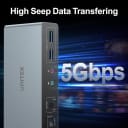
USB Data Rate — faster for large transfers. Compare the listed rate for the USB or shared-device connection, converting Mbps to Gbps when needed. A higher stated rate is useful for external storage and other data-heavy devices; keyboards and mice generally need far less. Listings may specify different speeds for different port types, so compare like with like rather than assuming every port reaches the maximum.
Laptop Charging — enough power for your computer. This figure is the stated USB Power Delivery output, not a guarantee that every laptop will charge at that rate. A useful value depends on your computer’s requirements, and more wattage can make a one-cable laptop setup more practical. If charging is not listed, plan to power the laptop separately.
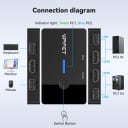
Wired Remote Switch — handy when the main unit is out of reach. A wired controller lets you place the switch off the desktop and keep the button within easy reach. It is a good convenience if the KVM will sit behind a monitor or under a desk. Check the listing for supported switching methods: a remote button does not mean keyboard hotkey switching is available.
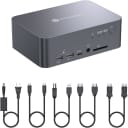
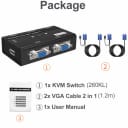
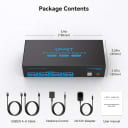
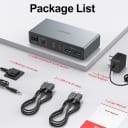
Verify what the box includes. Listings vary on whether video cables, host cables, power adapters, and remote controllers are included. Length limits and cable standards can also affect whether a high-resolution mode works, so check the requirements for each computer-to-switch and switch-to-monitor connection. Budget for any missing cables rather than assuming a familiar connector is sufficient.
Read compatibility notes closely. Some models have restrictions for macOS, laptops, docking stations, or particular keyboard types. A dual-display KVM also cannot create a second independent display signal if a computer does not support one. Customer ratings and reviews can point to setup questions worth investigating, but confirm important compatibility details against the listing and your computer’s specifications.
Swipe to compare all 8 picks →
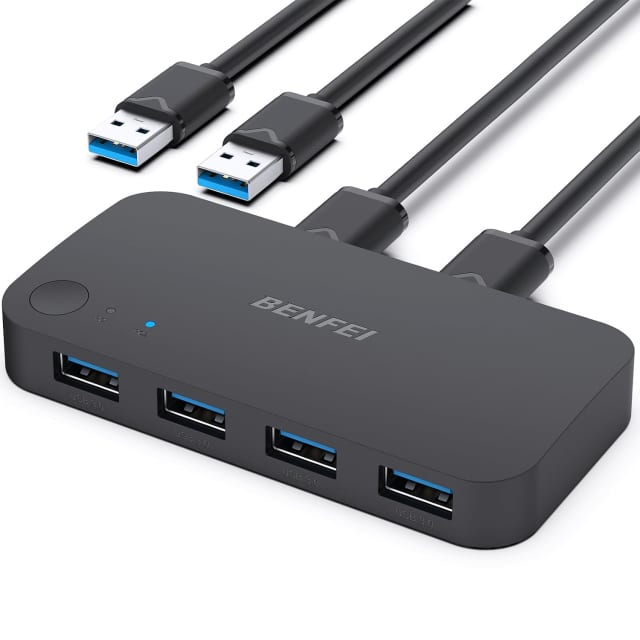
| At a glance | 1 SABRENT Thunderbolt 4 KVM Switch![]() | 2 AV Access iDock C10 Dual-Monitor KVM Dock![]() | 3 BENFEI USB 3.0 Switch![]() | 4 CMSTEDCD HDMI KVM Switch, 2 Computers/1 Monitor![]() | 5 TJCXELE DisplayPort Dual-Monitor KVM Switch![]() | 6 MT-VIKI 2-Port VGA KVM Switch![]() | 7 VPFET 8K HDMI Dual-Monitor KVM Switch![]() | 8 Unitek Dual-Monitor HDMI/DisplayPort KVM Switch![]() |
|---|---|---|---|---|---|---|---|---|
| Our score | 9.9/10 | 9.6/10 | 9.3/10 | 9.0/10 | 8.7/10 | 8.4/10 | 8.1/10 | 7.8/10 |
| Buyer rating | 4.0 | 4.0 | 4.1 | 4.2 | ||||
| Display Outputs | 2 | 2 | 0 | 1 | 2 | 1 | 2 | 2 |
| Max Display Mode | 8K@60Hz | 4K@60Hz | Not stated | 4K@60Hz | 4K@144Hz | 1920x1440@60Hz | 8K@60Hz | 4K@60Hz |
| USB Peripheral Ports | 7 | 6 | 4 | 2 | 4 | 3 | 4 | 4 |
| USB Data Rate | 40 Gbps | 5 Gbps | 5 Gbps | 0.5 Gbps | 5 Gbps | 0.5 Gbps | 5 Gbps | 5 Gbps |
| Laptop Charging | 60 W | 60 W | 0 W | 0 W | 0 W | 0 W | 0 W | 0 W |
| Wired Remote Switch | No | No | No | Yes | Yes | No | Yes | Yes |
| Buy |