GLACIER FRESH
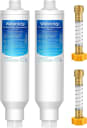
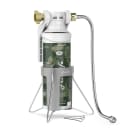
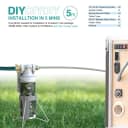
GLACIER FRESH GFRVWP03 3-Stage RV Water Filtration System
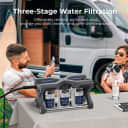
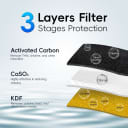
- Three filtration stages
- 0.2-micron high-flow filter
- Garden-hose quick-connect fittings
- Compact format for RVs and boats
available at

A good RV water filter should fit your setup, keep water moving, and target the concerns you actually have. Here’s how to compare filtration, flow, upkeep, and connection styles before you buy.
RV water filters range from simple hose attachments to faucet-mounted and under-sink systems. Start by matching the connection to how you use water, then compare the filter’s stated particle rating, flow, and replacement schedule.
Micron rating is a particle-size clue. A smaller stated number generally means finer particle filtration, so a 0.2-micron rating is finer than a 20-micron rating. But ratings alone don’t show which dissolved substances a filter reduces, and different filter designs may not be directly comparable. Look for contaminant-specific claims or certifications when those are your concern.
More stages can combine different jobs. A listing may describe sediment, carbon, or other filtration stages, each intended to address different water issues. Three or four stages can be useful when the listing explains what each stage does; a stage count by itself doesn’t prove better performance.
Service life tells you how often upkeep may come around. Listings give durations that range from a few months to longer intervals, while some describe a camping season. A clear replacement interval is more useful than a broad promise; actual life can vary with water quality and how much water you use.
Flow rate affects everyday convenience. A higher stated gallons-per-minute rate can mean less waiting at the tap, but the number depends on pressure and filter condition. Compare rates only when available, and remember that a filter without a published rate may still suit your use.
Capacity is a planning estimate, not a guarantee. A gallon figure can help you estimate replacement timing, but listings may not use the same testing conditions. Treat capacity as a rough comparison unless the manufacturer explains how it was measured.
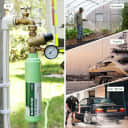
Connection type determines whether it fits your routine. Hose-inline filters attach to a water hose, while faucet-mount and under-sink systems filter at a particular tap. For campground hookups, check thread compatibility and whether the system is intended for filling a fresh-water tank or for continuous plumbing use.
For hookup use, prioritize a compatible hose connection. Quick-connect fittings can make setup and removal easier, while standard hose-thread connections can be convenient if they match your hose. Check included fittings and any pressure guidance before connecting a filter to campground water.
For drinking water at one sink, consider a point-of-use filter. Faucet-mounted and under-sink units can keep filtration near the tap you use for drinking or cooking. Confirm faucet compatibility, available cabinet space, and whether installation requires a dedicated connection.
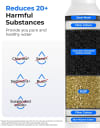
Think about what you want reduced. Carbon-based filters commonly advertise improvements to chlorine taste and odor, while sediment filtration targets visible particles. If you’re concerned about a specific contaminant, look for a claim or certification that names it; a fine micron rating or broad phrase like “cleaner water” isn’t enough to establish that.
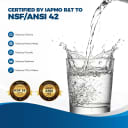
Read certifications by their exact scope. Listings may cite standards for aesthetic effects, material safety, or particular contaminant reductions. Those are different claims, so check the named standard and what it covers rather than treating “certified” as proof of every kind of filtration.
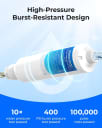
Follow the filter’s pressure and connection instructions. Campground water pressure can vary, and some systems specify an operating range or caution against connecting directly to internal RV plumbing. If instructions recommend using a filter to fill the fresh-water tank, follow that guidance and your RV manufacturer’s directions.
Plan for cartridge changes before a trip. Check whether the system replaces a cartridge or the whole filter, whether replacements are readily available, and how the unit should be stored between uses. Flush a new filter as directed; some listings specifically note that initial flushing may clear loose carbon.
Don’t rely on filtration to correct an unknown water problem. If a campground’s water quality is uncertain, consult local water-quality information and the filter maker’s specific reduction claims. Follow RV sanitation practices as well; a drinking-water filter is not a substitute for maintaining a clean tank and plumbing system.
Swipe to compare all 8 picks →
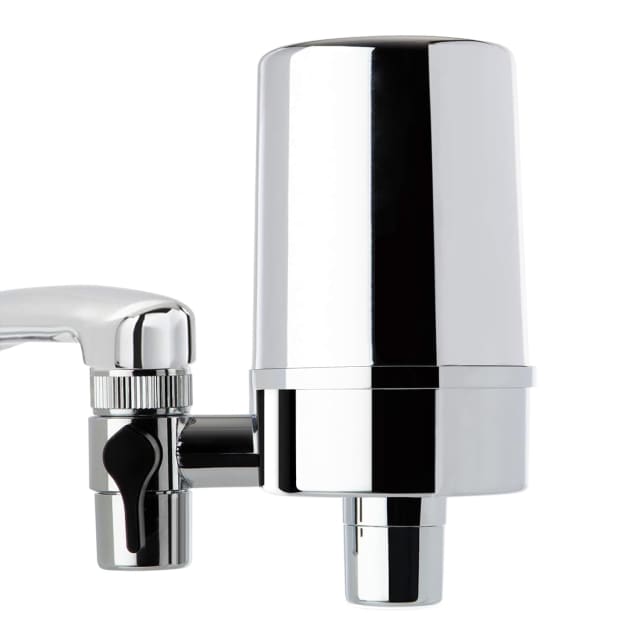
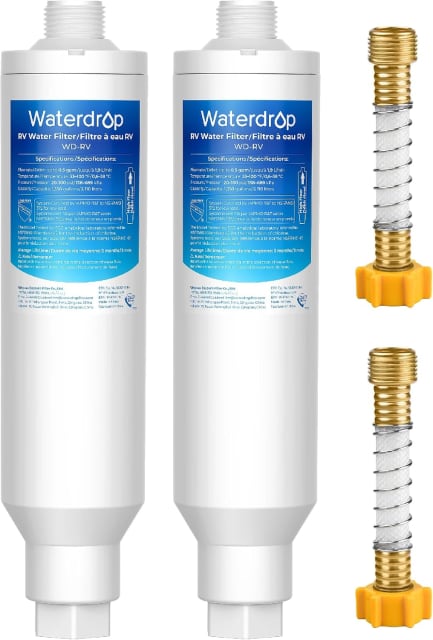
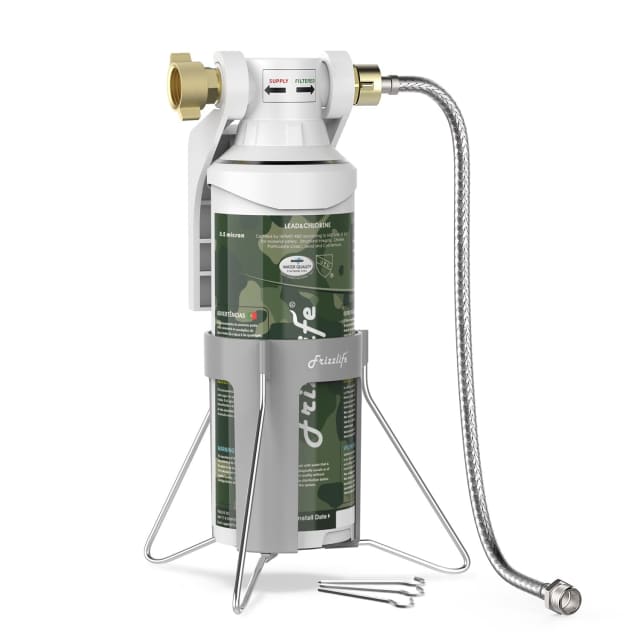
| At a glance | 1 GLACIER FRESH GFRVWP03 RV Water Filtration System![]() | 2 iSpring DF2-CHR Faucet Water Filter![]() | 3 PureDrop CUW4 Ultra-Filtration System![]() | 4 Camco Tastepure RV Water Filter![]() | 5 Kohree RV Inline Water Filter, 2-Pack![]() | 6 RVGUARD Inline RV Water Filter, 4-Pack![]() | 7 Waterdrop RV Inline Water Filter![]() | 8 FRIZZLIFE RV Inline Water Filter![]() |
|---|---|---|---|---|---|---|---|---|
| Our score | 9.9/10 | 9.6/10 | 9.3/10 | 9.0/10 | 8.7/10 | 8.4/10 | 8.1/10 | 7.8/10 |
| Buyer rating | 4.0 | 4.2 | ||||||
| Micron Rating | 0.2 µm | 0.5 µm | 0 µm | 20 µm | 20 µm | 20 µm | 20 µm | 0.5 µm |
| Filtration Stages | 3 | 2 | 4 | 6 | 5 | 2 | 2 | 1 |
| Service Life | N/A | N/A | 12 months | 6 months | 3 months | 3 months | 3 months | 6 months |
| Flow Rate | 1.5 GPM | 1.5 GPM | 0.5 GPM | 2.5 GPM | 0.5 GPM | 0.5 GPM | 0.5 GPM | 1.5 GPM |
| Capacity | 1,200 gallons | 500 gallons | 1,100 gallons | 10,000 gallons | 1,057 gallons | 15,000 gallons | 1,000 gallons | 1.5 gallons |
| Connection Type | hose-inline | faucet-mount | under-sink | hose-inline | hose-inline | hose-inline | hose-inline | hose-inline |
| Buy |