13% off
#1 Editor's Choice · Best overall
1

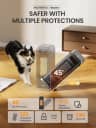
AEOCKY Metal Space Heater
- 1500W PTC ceramic heating
- ECO temperature regulation
- Remote, timer, and child lock
- Oscillating tower design
9.0
Score1K+ bought in past month
available at 
A space heater can make a chilly room comfortable in minutes—but the wrong one can waste energy, make too much noise, or create unnecessary safety risks. This guide explains which specifications matter most so you can choose a heater that fits your room, routine, and budget.
A good space heater should warm the room you actually use, run predictably, and give you sensible safeguards without demanding constant attention. We focused on the specifications shoppers can verify from listings, while keeping in mind that advertised coverage and noise figures are not perfectly standardized.
Start with the room. Check the heater’s advertised coverage against the size of the space you want to warm, but leave yourself some margin if the room has high ceilings, poor insulation, drafty windows, or an open doorway. A heater rated for a larger area may cycle less often, but no portable heater can compensate fully for major heat loss.
Treat wattage as a ceiling, not a performance score. Most standard plug-in space heaters top out around 1,500 watts because of typical household circuit limits. At the same wattage, electric resistance heaters convert essentially all of the electricity they use into heat; the meaningful differences are usually control, airflow, coverage claims, noise, and safety features.
Prefer useful temperature control. Multiple heat settings let you choose between faster warming and lower output, while an adjustable thermostat can turn the heater off when the room reaches a target temperature. That can be more convenient and potentially less wasteful than running a heater continuously at full power.
Plan for the sound. Fan-based heaters move heat quickly, but the fan can be noticeable in a bedroom, nursery, or workspace. A listing with a measured decibel rating is easier to compare than vague claims such as “quiet” or “whisper-quiet.”
Look for automatic protection. A tip-over shutoff should cut power if the heater falls, and overheat protection should stop operation if internal temperatures become unsafe. These features reduce risk, but they do not make unattended or improperly placed operation safe.
Give it open space. Place the heater on a stable, level, nonflammable surface with plenty of clearance around the front, sides, and top. Keep it away from bedding, curtains, furniture, water, and walkways; plug it directly into a wall outlet rather than an extension cord or power strip unless the manufacturer explicitly permits otherwise.
Inspect the electrical setup. Stop using a heater if the plug, cord, or outlet becomes damaged, loose, or unusually hot. Avoid running high-wattage heaters on a circuit that already powers other demanding appliances, and follow the manual’s instructions for placement, cleaning, and storage.
Heating Area: This is the manufacturer’s estimate of the room size the heater can warm. Higher is generally better, but coverage claims vary by ceiling height, insulation, climate, and desired temperature; compare products using the same assumptions and be skeptical of unusually generous figures.
Power: Measured in watts, this is the heater’s maximum electrical draw. More watts can mean more heat output from a resistance heater, but most household models cluster around the same maximum, so use this number mainly to understand energy use and circuit demands.
Heat Settings: This describes how many distinct heat outputs the heater provides. Two or three settings are typically more useful than a single fixed output, while a variable control can offer finer adjustment; make sure the listing does not count a fan-only mode as a heat setting.
Thermostat: An adjustable thermostat senses or targets a room temperature and can cycle the heater on and off. It is more useful than simple high/low controls when you want to maintain a comfortable temperature instead of manually monitoring the heater.
Noise Level: A decibel rating gives you a numerical estimate of operating sound, and lower is better for sleeping or concentrating. Because testing methods differ, use the number as a rough comparison and check whether it applies to the lowest, highest, or unspecified fan setting.
Weight: A lighter heater is easier to move between rooms, while a heavier one may feel more stable and contain a larger housing or base. Choose based on how often you will relocate it rather than treating low weight as an automatic advantage.
Convenience features can help. A timer, remote control, digital display, oscillation, and memory settings may make daily use easier. They should come after heating performance and safety, since they do not compensate for poor placement, inadequate coverage, or an unreliable thermostat.
Portability has trade-offs. A carry handle and compact body are useful if you heat different rooms, but very small heaters may have limited airflow or a smaller effective coverage area. If you plan to move one often, check both its weight and whether the controls are easy to use while standing.
Fan-based ceramic heaters warm quickly. They are often compact and offer adjustable heat and airflow, making them useful for personal heating and small rooms. Their fan noise may be more noticeable than that of passive designs.
Radiant heaters feel immediate up close. They direct heat toward people and nearby objects rather than relying entirely on circulating air. They can work well for one person in a drafty spot, but they may be less suitable for evenly warming a whole room.
Oil-filled radiators heat gradually. They are typically quiet because they do not need a fan, and their surface can continue radiating warmth after the heating element cycles off. They are often heavier and slower to warm a room than compact fan-based models.
Panel heaters emphasize gentle operation. These can be slim and quiet, but their effectiveness depends heavily on room size and insulation. Check how the heater is designed to stand or mount, and do not assume a thin profile means it can heat a large space.
Use wattage and runtime to estimate cost. A 1,500-watt heater uses 1.5 kilowatt-hours for every hour it runs continuously at full power. Multiply 1.5 by your electricity rate and the number of hours of operation; a thermostat may reduce actual consumption by cycling the heater off, while a lower setting uses less power.
Compare comfort, not just the sticker price. A cheaper heater that runs inefficiently for long periods may cost more to operate than a better-controlled model. Electric resistance heaters are broadly similar in how they convert electricity to heat, so prioritize the controls, coverage, noise, and safety features that fit your use.
| At a glance | 1 AEOCKY Metal Space Heater | 2 Kismile Small Ceramic Space Heater | 3 MORENTO Smart Ceramic Space Heater | 4 Dreo Space Heater | 5 Amazon Basics Ceramic Space Heater | 6 WINHL 1500W Electric Space Heater |
|---|---|---|---|---|---|---|
| Our score | 9.0/10 | 8.1/10 | 8.1/10 | 8.2/10 | 7.5/10 | 7.5/10 |
| Buyer rating | ||||||
| Heating Area | 200 sq ft | 215 sq ft | 200 sq ft | 200 sq ft | 150 sq ft | 200 sq ft |
| Power | 1,500 W | 1,500 W | 1,500 W | 1,500 W | 1,500 W | 1,500 W |
| Heat Settings | 3 | 2 | 4 | 3 | 2 | 3 |
| Thermostat | Yes | Yes | Yes | Yes | Yes | Yes |
| Noise Level | 45 dB | — | 36 dB | 34 dB | 43 dB | — |
| Weight | 8.8 lbs | 2.8 lbs | 3.5 lbs | 3 lbs | 2.1 lbs | 2.2 lbs |
| Buy |