Trusted Reports Logo

TrustedReports

Top Air Purifiers in 2026

Clear the air without guessing: this guide explains which air-purifier specs matter, how listings can mislead you, and what to pay for cleaner indoor air. Use it to match a purifier to your room, allergies, noise tolerance, and maintenance habits.

  • 5 products ranked
  • 31.3K buyer ratings
  • Independently researched
  • Updated September 2026

Our top pick

Score 9.9/10

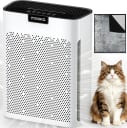
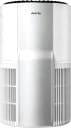
20% offPuroAir 240 HEPA Air Purifiers for Home Pets Bedroom - 1,000 Ft²

PuroAir

PuroAir 240 HEPA Air Purifier

4.5(19,479)

“Its combination of pre-filter, HEPA, and activated carbon filtration with an automatic particle sensor makes it a capable, set-and-forget choice for larger rooms.”

3K+ bought in past month

Check price on Amazon

available at Amazon

  • Three-layer filtration includes activated carbon
  • Particle sensor adjusts power when air is polluted
  • Sleep mode supports quieter bedroom use
  • Rated for rooms up to 1,000 square feet in one hour
Not the right fit? See our other picks

  1. 2AEOCKY 4200 ft² YearChange Air Purifier with 515 CADR for Whole-House
    Best Value

    AEOCKY YearChange Air Purifier

    9.4/104.4

    Its odor-neutralizing gel adds active smell control alongside particle filtration, a useful advantage over purifiers focused only on airborne particles.

    Check price

    available at Amazon

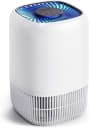
  2. 3MOOKA Air Purifier for Home Bedroom Large Room 2200 Ft², HEPA Filter, White

    MOOKA Air Purifier

    8.9/104.5

    Its multi-sided air intake, washable pre-filter, and automatic response to measured air quality make it a versatile pick for larger rooms and changing household air.

    Check price

    available at Amazon

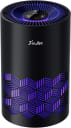
  3. 4FreAire Air Purifiers for Bedroom Up to 1086 Ft², KN6391RGB, Black

    FreAire KN6391RGB Air Purifier

    8.3/104.8

    Its dual-channel intake and 360-degree outlet pair broad room coverage with quiet sleep mode, ambient lighting, and an aroma pad in one compact purifier.

    Check price

    available at Amazon

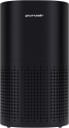
  4. 5VOOPNU Air Purifiers for Home, High Efficiency Filter Up to 1076 Ft², White
    Lowest Price

    VOOPNU Air Purifier

    7.8/104.4

    Its easy one-tap controls and stated coverage of up to 1,076 square feet make it a straightforward pick for shoppers seeking broad room coverage in a compact purifier.

    Check price

    available at Amazon

An air purifier is only useful if it moves enough filtered air through your room—and quiet enough that you’ll actually run it. We’re focusing on the specifications that make the biggest practical difference, while flagging the marketing claims that deserve a closer look.

How to choose an air purifier

Start with the room, not the gadget. Measure the space where the purifier will run, and include connected areas if doors are usually open. For bedrooms, a model rated well above the room’s square footage gives you more flexibility to run it quietly; for kitchens, living rooms, or rooms with pets, extra capacity can help clear pollutants faster.

Use CADR as the reality check. Clean air delivery rate measures how quickly a purifier supplies filtered air, usually for smoke, dust, and pollen. A higher CADR is generally better, but the number is meaningful only when tested using the same standard. If a listing gives several CADR figures, use the smoke rating for the most useful apples-to-apples comparison.

Treat coverage claims as estimates. Room-coverage figures often assume a particular number of air changes per hour, and manufacturers do not always make that assumption obvious. A purifier claiming coverage for a very large room may do so at just one air change per hour, which can be less useful than a smaller stated area cleaned several times per hour.

What to look for

CADR is the most useful performance number. Look for a published smoke CADR in cubic feet per minute. Higher is better when the test method is comparable; as a rough sizing rule, choose a purifier with a smoke CADR around two-thirds of your room’s area in square feet if you want about four air changes per hour in a standard-height room. Ceiling height, open floor plans, and heavy pollution may call for more capacity.

Room coverage provides a starting point. Compare the claimed square footage with the room you actually need to clean, but read the fine print for air changes per hour. A generous coverage number is useful only when it is paired with a meaningful cleaning rate and a clearly stated test method.

Noise determines whether you keep it running. Lower decibel ratings are better, but listings often quote the quietest sleep setting rather than the setting that delivers the most cleaning. Look for measurements at multiple speeds, and listen for fan hum or high-pitched motor noise if you are sensitive to sound.

Demand a specific filter claim. “True HEPA” or a clearly identified H13 HEPA filter is more informative than “HEPA-style” or “99.97 percent filtration” without test conditions. HEPA filtration can capture fine particles, but it does not by itself remove gases, odors, or every pollutant. For those concerns, check whether the purifier has a substantial activated-carbon layer rather than a token carbon-coated sheet.

Check filter life before checking the price. A longer advertised replacement interval can reduce maintenance and ownership cost, but actual life depends on dust, smoke, pets, and operating hours. Confirm that replacement filters are available, priced reasonably, and easy to install; a low upfront price is less appealing if the filter is difficult to source.

Consider energy use over the whole year. Lower wattage is generally better for a purifier that runs continuously, though the actual draw changes by fan speed and automatic mode. A slightly less efficient purifier that cleans the room faster may use no more electricity in practice than a weak unit running constantly at high speed.

Smart controls are optional, not a performance feature. Apps, schedules, air-quality graphs, and voice control can make consistent use easier. They are worth paying for only if you will use them; local buttons and a reliable auto mode may be preferable if you want fewer accounts, notifications, or connectivity concerns.

Features worth paying for

Automatic mode can reduce fuss. A built-in particle sensor can raise the fan speed when air quality worsens and slow it down afterward. Sensor readings are not a complete measure of indoor air quality, though, and a purifier should not be left in auto mode if it routinely chooses a fan speed too low for your needs.

A washable prefilter is genuinely useful. It catches hair and larger dust before they reach the main filter, potentially extending filter life. It does not replace the HEPA filter, and it still needs regular cleaning to avoid restricting airflow.

Avoid ozone-generating features. Ozone is an irritant, not a cleaning upgrade for ordinary home use. Be cautious with ionizers, electrostatic functions, and vague “active purification” claims unless the feature can be disabled and the manufacturer provides credible emissions testing.

Placement and maintenance

Give the airflow room. Place the purifier where its intake and exhaust are not blocked by walls, curtains, furniture, or bedding. Keep it near the source of concern when practical—such as a bedroom for nighttime allergies—but avoid putting it where spills, steam, or greasy cooking residue can reach the unit.

Run it consistently. Continuous operation at a quiet, moderate setting often works better than occasional blasts at maximum speed. Close doors and windows when outdoor smoke or high pollen is the problem, and use kitchen or bathroom exhaust fans to remove moisture and cooking pollutants at the source.

Maintain the filters on schedule. Vacuum or wash the prefilter according to the manual, and replace the main filter when the indicator, calendar interval, or visible loading says it is due. Never wash a filter unless the manufacturer explicitly says it is washable; a clogged filter reduces airflow and can undermine the purifier’s main benefit.

Common buying mistakes

Do not buy by coverage alone. A large square-foot claim can conceal a low air-change rate, while an impressive particle-removal percentage says little about how much air the machine actually processes. Compare CADR, stated test conditions, and noise together.

Do not assume more features mean cleaner air. A display, app, UV light, ionizer, or elaborate sensor package can add cost without increasing filtered airflow. Put your budget first toward adequate CADR, a credible particle filter, manageable noise, and affordable replacement filters.

Frequently asked questions

Swipe to compare all 5 picks →

At a glance
1PuroAir 240 HEPA Air Purifiers for Home Pets Bedroom - 1,000 Ft²
PuroAir 240 HEPA Air Purifier
2AEOCKY 4200 ft² YearChange Air Purifier with 515 CADR for Whole-House
AEOCKY YearChange Air Purifier
3MOOKA Air Purifier for Home Bedroom Large Room 2200 Ft², HEPA Filter, White
MOOKA Air Purifier
4FreAire Air Purifiers for Bedroom Up to 1086 Ft², KN6391RGB, Black
FreAire KN6391RGB Air Purifier
5VOOPNU Air Purifiers for Home, High Efficiency Filter Up to 1076 Ft², White
VOOPNU Air Purifier
Our score9.9/109.4/108.9/108.3/107.8/10
Buyer rating
4.5
4.4
4.5
4.8
4.4
CADR200 cfm294 cfm176 cfm—270 cfm
Room Coverage1,000 sq ft4,200 sq ft2,200 sq ft1,086 sq ft1,076 sq ft
Noise Level—22 dB20 dB20 dB22 dB
HEPA FilterTrue HEPANot statedTrue HEPANot statedTrue HEPA
Filter Life6 months12 months3 months——
Energy Use22 W12.5 W26.3 W——
Smart ControlsNoYesNoNoNo
BuyCheck price Check price Check price Check price Check price

Our top pick · 9.9/10

PuroAir 240 HEPA Air Purifier

Check price on Amazon